
My friend Rosie started a new job last year with a rewilding project in Lincolnshire. So whilst I was visiting in June, I got to have a behind the scenes tour. Wilder Doddington is part of the Doddington Hall Estate and Rosie’s tour started at their brand new purpose built education centre.
This new education hub is set amongst wide expanses of grasslands which Rosie informed me were now part of a Wetter Better project, where old land drainage pipes have been smashed and ponds and scrapes dug in a bid to return the grasslands to swamp. I look forward to seeing these areas progress in the future.
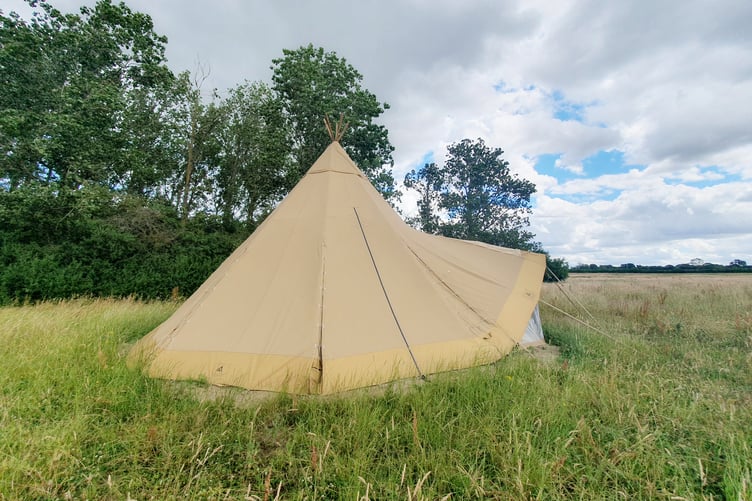
A little way from the new centre Rosie guided me through a secret path into a small woodland alive with meadow brown butterflies. Tucked in some of the trees lining the path were an array of nests made by students who may have been understanding how tricky it is for birds to create these amazing feats of engineering. The woodland opened up into a meadow and there surrounded by nature stood a teepee outdoor classroom; what an incredible place to learn.
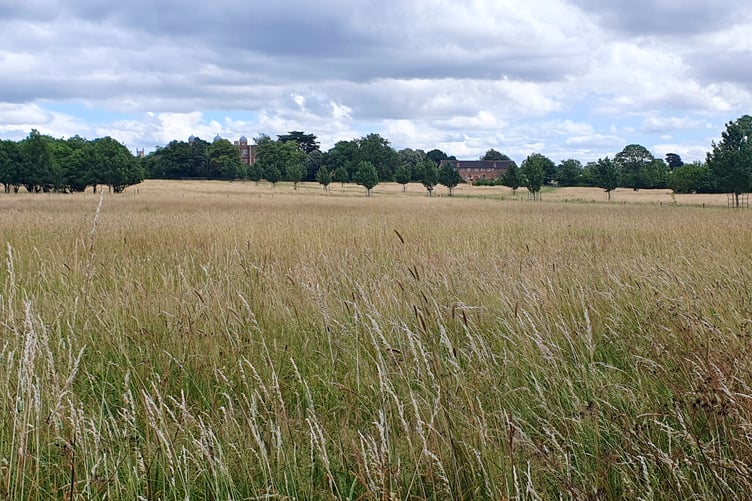
Returning to the public part of the estate we set off on a nature ramble. The parkland is predominantly made up of swathes of tall grasses with meandering paths cut within and mature trees dotted around. Strolling along these paths we passed a horse chestnut tree that had been struck by lightning. Its trunk had been split and yet it was still going strong, proving just how incredible trees can be. Whilst marvelling at the tree we spotted a nearby cow pat that was home to a devils coach horse beetle which we watched as it skuttled between holes in the pat. Areas of bramble scrub at the edge of the park were attracting numerous peacock and red admiral butterflies and we watched as they danced around each other, joined momentarily by a holly blue.
We wandered through a field that was scattered with small saplings and imagined what it would be like as the tiny trees grew. If left to its own devices it will probably turn into a wonderful scrubby woodland and be home of an array of birds and other wildlife. In this moment we listened to the cacophony of crickets and grasshoppers chirping and watched a large blue and green dragonfly as it zoomed up and down the path in front of us. A tiny butterfly passed us and we followed it hoping it would land; when it did we could see it was the enchanting small copper.
From the meadows we ventured into the woods greeted by a chorus of baby blue tits twittering. We stopped to watch two different sized white butterflies dancing but we couldn’t identify them officially since the large white and small white butterfly sizes vary and sometimes overlap.
On entering the woods I noticed that it was mainly made up of Ash, some of which had died off leaving dead trunks adorned with bracket fungus, whilst others were still very much alive and hopefully fighting off the dieback disease.
The woodland paths were lined with self-heal, thistles and woundwort with bramble briers reaching out to try and catch us. Most of the woodland appeared wild and inaccessible leaving it safe for wildlife to roam without fear of humans.

As we walked deeper into the woods the trees became more diverse with cherry and fir trees mixed in with the ash and with the fir trees came the unmistakable high pitched calls of wonderful goldcrests. It also seemed that every chiff chaff was out to serenade us throughout the wood with one last tune before they go quiet for the summer.
A sign reminded us to stop, close our eyes and use our senses, and when doing so even more sounds became apparent. A buzzard called from high in a tree and I could hear the rattle of branches as it launched itself into the air. The continual drone from all around was the wonderful sound of hoverflies and rustle from the ground told me that there were probably mice or voles travelling through the undergrowth.
We walked through a copse called Pig Spinney and alongside a field called Donkey Close where various “ponds” were surrounded by wild flowers and insects. Rosie told me that the ground in this area is predominantly clay and that these holes were dug to provide materials to build the house; the resulting holes in the ground filled up creating fabulous wildlife pools. I loved hearing the names for areas of the estate and it reminded me of naming farm fields and woods when I was growing up with ”bouncy tree wood” being the best one that I can remember.
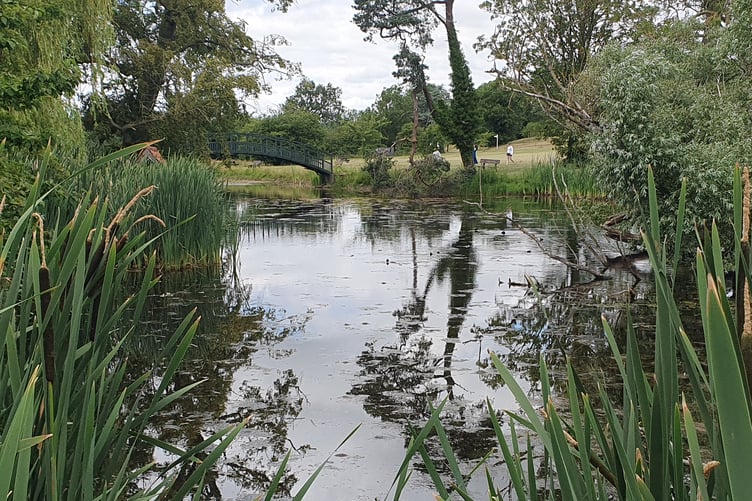
Returning to our starting point, we finished up the tour by sauntering around a large pond surrounded by bullrushes. The path circumnavigated the lagoon giving us a fabulous view of its inhabitants. Two Egyptian geese preened on the shores, a little grebe fished whilst its baby snoozed on a convenient log and we counted at least 12 baby coot scattered across the water. Then within a few feet of where we were standing a moorhen led its tiny babies through the reeds.
What a fabulous day. I highly recommend spending some time here if you are visiting Lincolnshire or nearby.
Comments
This article has no comments yet. Be the first to leave a comment.