
South Moor Vets has five vets on duty at night and weekends, plus three nurses across branches. I am an equine vet and cover one in five weeknights and weekends with the other equine vets.
Being on call is a real pain: I need to be able to jump in my car and go if there is an emergency. I can't be miles away walking the dogs; I can't have the children without backup, and I cannot leave our area. However, this service is essential so that animals under our care have access to a vet 24 hours a day, 365 days a year.
Recently I was on call when, at 10.30pm, I was about to go to bed, and my phone went off. Relief hit when I saw it was not the practice but a friend, followed by concern as I remembered his wife was heavily pregnant and he would not normally call at that hour. He explained he had heard a dog barking and found a terrier trapped by its back end on barbed wire two fields from his house. He had tried to help, but it was wedged on the barbs and had bitten him in panic. I was impressed he had gone to look for it, then immediately thought we could not ask his pregnant wife to climb fences in the dark to help a distressed, injured dog.
I considered sending a small animal vet on duty, but it felt unfair as they usually work in clinics, not dark fields. Half an hour later I arrived at his house, and we headed out with head torches. The dog had twisted so much it was effectively bound to the fence by its own skin. It was not possible to free it without further damage, so a quick surgical release under torch light was the only option. The dog was remarkably unfazed afterwards. There were no owner details on the collar, but a microchip scan gave a number which the duty nurse used to trace the owner. At that moment another nurse called to say a foal had been born but was not suckling.



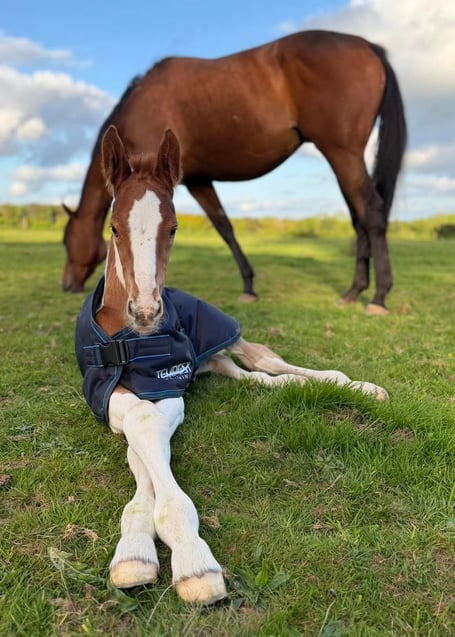
I left the dog with my friend, who gave it food and pain relief, and headed to the foal while phoning the owner. She came to collect the dog and promised to have it checked. Newborn foals need colostrum quickly as immunity is only absorbed in the first hours of life. Without it, they are at risk of sepsis. Sometimes mares reject foals, preventing suckling. At the scene, the mare was agitated and not allowing the foal to feed. Luckily, we have a hormone injection, which, when used in mares with newborn foals, usually makes them fall in love with the foal. (No, vets do not have access to any love drugs that work on humans!). I also gave the mare a painkiller in case she was a bit sore after giving birth, and this was adding to her agitation.
While waiting, the owner milked the mare into a bottle so the foal could receive its first colostrum. The following day we blood-tested the foal and confirmed it had adequate immunity thanks to the owner’s care.
It was an unusual night on call, but I went home knowing I had made a difference. Please ensure your animals are registered with a vet and check who provides out-of-hours cover, as it may not be your local practice.
Comments
This article has no comments yet. Be the first to leave a comment.