
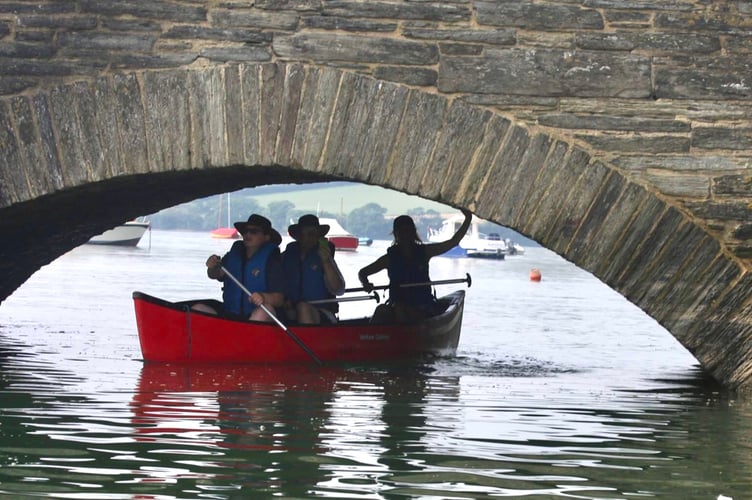
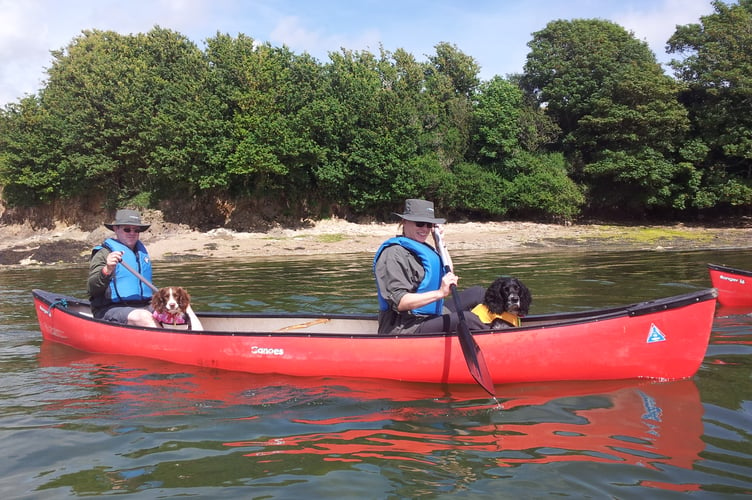
The joy of making the same journey, whether it be a favourite walk, cycle or in my case, canoe trip is that you become familiar with that small portion of the landscape and its wildlife. You can not only see the seasons change but you can observe the finer details and nuances that you would miss if you had not taken the journey many times.
Getting on the water at Newbridge Quay there are sea slaters living in the nooks and crannies of the walls. A type of crustacean, looking like and related to woodlice, they play an important part in the ecosystem, eating rotting vegetation and helping to increase the surface area for bacterial decomposition.
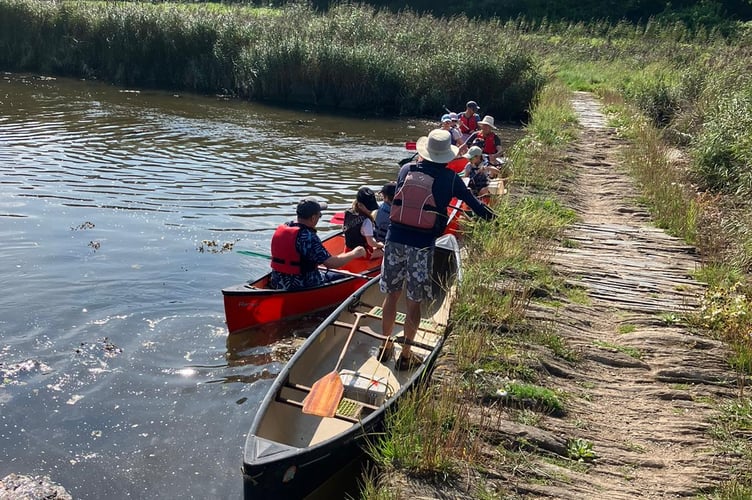
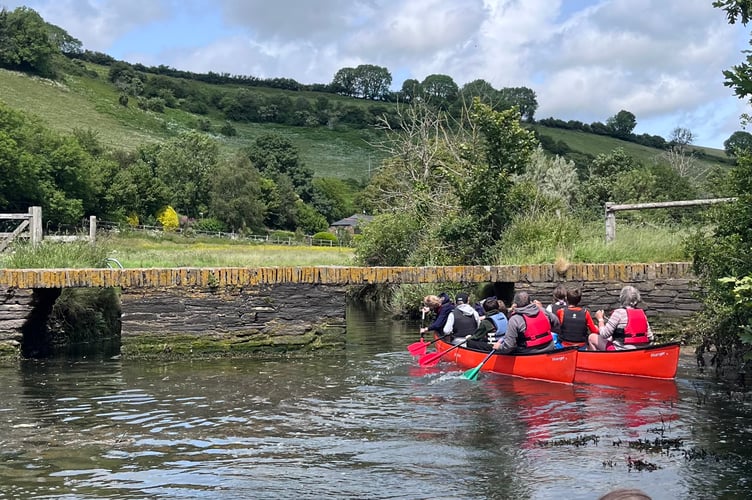
Pushing off from the quay to travel up Bowcombe Creek and under New Bridge, a favourite haunt of bridge jumpers, there are usually grey mullet to be spotted swimming next to the bridge pillars, hiding in the shadows and feeding on the algae in the water. Taking a right turn and paddling near the treeline there is a chance to see a kingfisher with its bright blue and orange plumage and low, rapid flight over the water. Failing that, there are always male and female mallard ducks on the water or sitting out on the shore and buzzards soaring overhead.


Further down the creek herons, cormorants and little egret are likely to be seen all making the most of the creek as a food source and all with a different hunting strategy. The heron likes to wait patiently, usually in favourite spots, and ambushes prey as it passes by.
Large and black, the cormorant with a bobbing dive hunts underwater, powered by large webbed feet placed well to the back of the body. It’s remarkable that it can pursue any prey in the muddy waters of the creek and after a period of hunting can characteristically be seen perched out with wings spread out drying. It is often said that this is because the wings have evolved to be porous, get water logged and not trap air allowing the bird to dive and swim underwater. I think they are spread out when talking to their mates saying ‘I caught a fish this big last week’.
The little egret has attractive white plumes on the back of their head and this small white heron is firmly established, having arrived in UK in significant numbers in late 1980’s following a natural expansion from Europe. They are active hunters walking and running chasing prey in the shallows; at high tide they will be sat on the beach or in a tree waiting for the water to recede to start hunting again.
Finally reaching the footbridge at the end of the creek I have on occasion seen stoats hunting along the shoreline and on one memorable day a whole family of them playing on the bridge. Here I will be guaranteed to see shrimp in their millions, like the grey mullet, feeding off the algae, making the most of the warm waters and abundance of food found in the creeks of the estuary.
The return journey gives me a chance to see everything again and perhaps something different? A seal, an osprey, a jay? You never know.
Comments
This article has no comments yet. Be the first to leave a comment.