
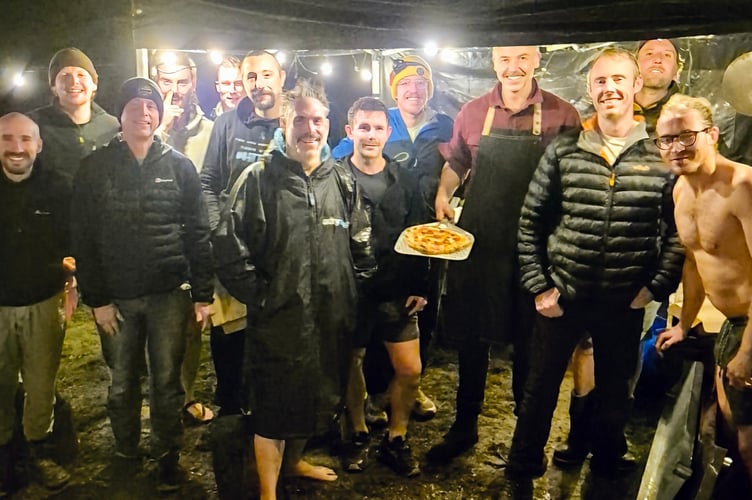
Nearly 30 men from across South Devon have completed a month-long mental-health challenge aimed at confronting the growing crisis in men’s wellbeing.
The 30-day MENtal Health Challenge, organised by local coach Ben Stafford-Davies of Invested Friends, combined daily personal tasks with group activities to raise awareness and nearly £2,000 for Resilient Lives CIC, the organisation behind the community programme Dough Bros.
Against a national backdrop in which suicide remains the leading cause of death for young men, the challenge set out to prove that when the right space is created, men will show up for themselves and for each other.
Over the month, participants took part in sea swims, litter-picks, mindful writing tasks, and the traditional grow-a-moustache, each activity chosen to encourage reflection, responsibility and connection.




For many involved, the challenge became more than a series of tasks — it became a reminder that small, consistent acts of wellbeing can interrupt harmful cycles.
One participant, Ben Hunter, said he joined after seeking a male-oriented support group to help him navigate complex anxiety and depression.
He spoke openly about the long shadow cast by years of alcohol misuse and the life-changing consequences that followed. Yet, two years into sobriety, he describes this challenge as part of his “recovery, healing and rebuilding chapter”.
The challenge built on that ethos, giving men structure, permission and collective momentum to confront thoughts they might otherwise avoid.
At times, he said, the emotional demand of the tasks pushed him into difficult introspection. But where he once would have withdrawn, he kept returning.
“Showing up is a win,” he reflected, describing how even attending the final meetup through a “battle of neggy thoughts” felt like an achievement in itself.
Organiser Coach Ben said the month reaffirmed something he sees regularly in his work with men: connection is not the problem, the environment is.
When men feel unsafe to express vulnerability, he said, they instinctively protect themselves, often at great personal cost. But in a judgement-free space, he watched participants form bonds and share deeply personal experiences.
The challenge’s success underscores a broader reality. Men’s mental health interventions often hinge not on clinical complexity but on community, consistency and courage.
Coach Ben explains that preventative work — learning gratitude, completing small acts of kindness, confronting insecurities — can be transformative when done collectively.
For Hunter, the impact will outlast the 30 days. He plans to complete the remaining tasks in his own time and hopes next year will bring further growth.
For the organisers, the goal is clear: keep building spaces where men feel safe enough to talk, safe enough to fail, and safe enough to try again.
"It can be hard organising and making initiatives like this happen for men,” Coach Ben said. “But I wouldn't trade it for the world. Seeing men, within days, go further than they have in years with men they’ve never met makes the challenge of organising this a gift.”
According to the Office for National Statistics, in 2024 there were 17.6 male registered suicides per 100,000 deaths, compared to 5.7 per 100,000 for females.
As we continue to grapple with rising levels of male loneliness, anxiety and suicide, this challenge suggests something hopeful — when men are given a place to stand together, they do. And it might just make a measurable difference.
Comments
This article has no comments yet. Be the first to leave a comment.