

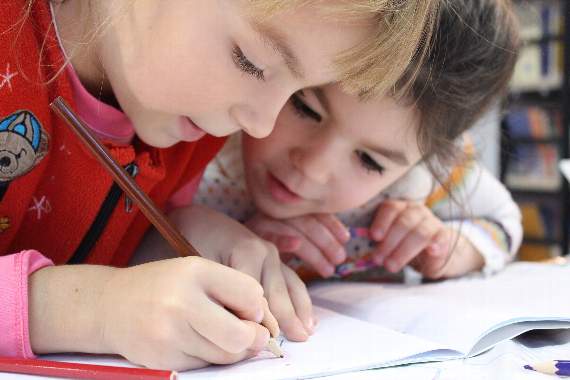
Shocking figures have shown the worrying number of children living in poverty throughout the South Hams.
On average, 23.28 per cent of children living in the South Hams are living in poverty with Thurlestone having the highest recorded level.
End Child Poverty has published new figures on the level of child poverty in each constituency, local authority and ward in the UK.
The group has calculated that Thurlestone has 42.37 per cent of children living in poverty and 29.19 per cent before housing costs have been taken into account.



Following behind, is two locations in Totnes with the second and third highest child poverty rates in the South Hams-Totnes Bridgetown with 38.73 per cent and Totnes Town with 36.54 per cent, both after housing costs have been considered. Closely behind, is Dartmouth Townstal which has a child poverty percentage rate of 34.54 per cent.
The Liberal Democrat leader on South Hams district council, Keith Baldry has reflected that the “disproportionate cost of housing” throughout the South Hams is “clearly impacting” families. People in the area are “struggling to make ends meet” in the South Hams, an area that attracts wealthy second home buyers.
Roughly, the result that three in ten children are living in poverty in the Totnes constituency “is a disgrace” added Cllr Baldry. “Government cuts to benefits and cuts to public services are damaging people’s lives and we won’t see our Conservative-led council or our Conservative MP demanding change.”
In comparison to other areas in Devon, the South Hams district is very similar to West Devon Borough Council area which has a 23.17 per cent child poverty rate. However, Plymouth and Torbay have a much higher estimate of 27.75 per cent and 30.11 per cent of children living in poverty respectively.
Additionally, Exeter has a 21.60 per cent and Teinbridge has a 22.58 per cent child poverty percentage. All these figures are calculated after housing costs have been considered.
A spokesman for Devon county council said: “We are working with our partners to improve the economy across the county and boost the supply of higher paying jobs that are available to local people.
“We are committed to increasing our productivity and improving the skills of working people - particularly young people.
“And we work closely with schools and governors to improve the education of disadvantaged children. This year’s results for our youngest children at Key Stage 1 show the percentage achieving the expected standard is better than the national average.
“And although across all key stages the gap between the achievement of disadvantaged children and their peers is reducing, we recognise there is still work to do, and this is a key priority for us.”
Sam Royston, Chair of End Child Poverty and Director of Policy and Research at the Children’s Society, said: “No family in modern Britain should be struggling to put food on the table, heat their homes and clothe their children. End Child Poverty is calling on the Chancellor to end the freeze on children’s benefits, and to invest in interest free credit for low income families, to ensure that poverty doesn’t result in spiralling debt.”
A child is said to be living in poverty if they are in a family living on less than 60% of median house income. According to the latest official statistics 60 per cent of median income (after housing costs) was around £248 per week. To find the relevant poverty line for a particular household type, this then needs to be adjusted to take account of household size. For a couple with two children under 14 this means multiplying by 1.4-giving a poverty line of £347 per week.
The figures published on Wednesday, January 24, are estimates of child poverty in different areas, calculated using HMRC data and the Labour Force Survey.
The End Child Poverty coalition exists to hold the government, and all the main political parties to account for their commitment to eradicate child poverty by 2020. The coalition is made up of nearly 100 organisations from civic society including children’s charities, child welfare organisations, social justice groups, faith groups, trade unions and others, united in our vision of a UK free of child poverty.
Everyday, End Child Poverty members see the real impacts that poverty has on the daily lives of children today. The coalition are calling for an end to the freeze on children’s benefits as new figures have been released to show that in some constituencies across the UK, more than half of children are growing up in poverty.
Comments
This article has no comments yet. Be the first to leave a comment.