
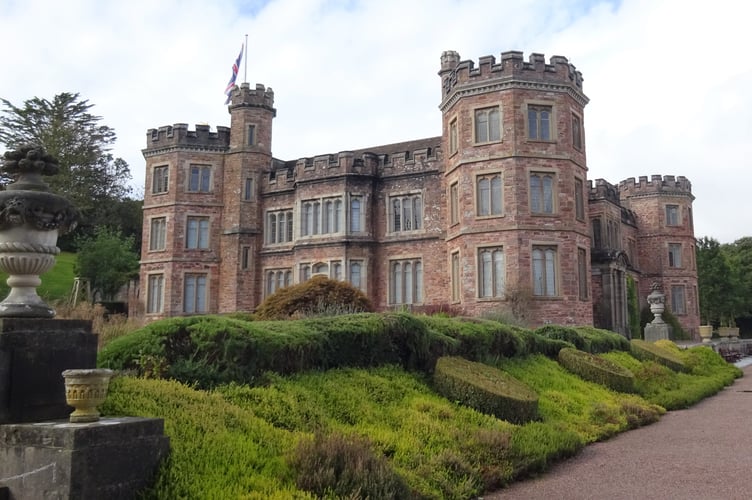
A Victorian aristocrat with a fascination for naval innovation and a sharp eye for social change was the focus of a recent talk exploring life at Mount Edgcumbe.
Looking out across the Tamar Estuary, Mount Edgcumbe House still dominates the landscape, a reminder of the noble family who lived there for centuries. Guest speaker Clive Charleton spoke to the Kingsbridge Estuary u3a in February about Ernestine Edgcumbe, who was born at the estate in 1843.
Her father, the Earl of Mount Edgcumbe, served as aide-de-camp to both King William IV and Queen Victoria. Although Ernestine never married, she developed a keen interest in the rapidly changing world around her, particularly the impact of the Industrial Revolution and developments in the Royal Navy.
When her brother inherited the title, Ernestine moved with her mother to Cotehele, where an east wing was added to the house. From there, much travel was by boat. In her diary, she recorded her observations of life on the river, expressing amusement at vessels stranded in the mud.




Ernestine travelled widely, journeying across Cornwall and as far north as Alnwick in Northumberland, where she rode around the castle grounds with the Duke. She took part in London’s social season and mixed in royal circles, although she reportedly disliked the experience.
As railway networks expanded, she travelled across Europe and even reached St Vincent in the Caribbean. She later described seeing the Soufrière volcano before it erupted.
Back in the South West, Ernestine became involved in local politics. In the years before the First World War, she played an active role in the Primrose League, supporting conservative and patriotic causes. She remained engaged in local affairs until she died in 1923.
Comments
This article has no comments yet. Be the first to leave a comment.