

On June 6, millions around the world commemorated the 82nd anniversary of D-Day, one of the defining military operations of the Second World War.
The South Hams played a pivotal role in the success of the Normandy landings.
While many will remember the training exercises that took place on local beaches, including the tragic Exercise Tiger at Slapton Sands, the district's contribution extended far beyond the shoreline.
In late 1943 and early 1944, around 3,000 residents were evacuated from villages including Slapton and Torcross after the area was requisitioned by the military for D-Day preparations.
Families were forced to leave their homes, farms and businesses to allow British and Allied troops to carry out large-scale landing exercises along the coastline.
A new book by wartime historian Gary Sterne investigates the tragedy that unfolded during Exercise Tiger in April 1944 and, for the first time, identifies the previously unknown servicemen who lost their lives during the training mission.
Yet Exercise Tiger was only one part of the South Hams' wartime story. Across the district, hotels, railways and local communities all played their part in supporting one of the most ambitious military operations in history.
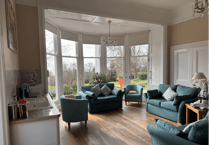
Burgh Island Hotel, around 20 miles from Slapton Sands, was transformed into a recovery centre for wounded RAF personnel, many of whom later returned to active service.
The Art Deco landmark was also associated with meetings between General Dwight D. Eisenhower and Winston Churchill in the weeks leading up to D-Day, adding another chapter to its wartime history.
Giles Fuchs, owner of Burgh Island Hotel, said: "Burgh Island's wartime history is a reminder that the preparations for D-Day reached far beyond the obvious military sites. The South Devon coast played an important role in the build-up to the Normandy landings.
"As we mark the D-Day anniversary, it feels important to remember the quieter places and communities that formed part of that story, and to preserve the hotel's connection to one of the defining moments of the Second World War."
Another important element of the region's wartime contribution was the South Devon Railway.
The railway network became a vital military artery during the war, helping facilitate the evacuation of more than 100,000 children from London while also moving thousands of American and Allied troops involved in D-Day rehearsals across the South West.
Among its historic vehicles is the Pullman Car 'Lydia', built in 1925 by the Midland Railway Carriage & Wagon Company.
During the Second World War, ‘Lydia’ was reserved for use by Sir Winston Churchill and is believed to have hosted strategic discussions involving the wartime prime minister and Eisenhower as plans for the Normandy invasion took shape.
While Exercise Tiger remains the South Hams' best-known connection to D-Day, sites across the district formed part of a much wider wartime network.
The success of the Normandy landings depended not only on the soldiers who stormed the beaches of France, but also on the thousands of people who supported the war effort from behind the scenes.
Eighty-two years on, these stories serve as a reminder that the road to victory in Normandy began long before June 6, 1944, and that the South Hams played a significant role in helping secure Allied success in Europe.
Comments
We've recently changed our login process. If you have an account for commenting, you will need to re-register on the login window.
This article has no comments yet. Be the first to leave a comment.