

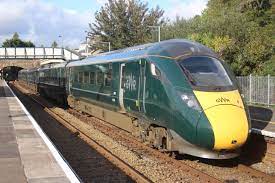
The Office of Rail and Road (ORR) – the economic and safety regulator of Britain’s railway – has made several recommendations from its review of how the rail industry responded to the potential safety issues leading to the withdrawal of Hitachi Rail’s Class 800 series trains in May last year.
The trains were used by GWR which serves Totnes and Ivybridge as well as several other companies.
When cracks were found on the bodyshell of some trains, rigorous safety checks by Hitachi Rail and the train operators impacted were carried out, with oversight from ORR.
Stringent mitigation measures were put in place to allow the trains to re-enter service without passenger safety being compromised, which have assured no safety failures and trains have performed as specified while in service.


.jpg?width=209&height=140&crop=209:145,smart&quality=75)
ORR immediately launched a review of both the passenger and safety impact after trains were withdrawn from service for safety checks on Great Western Railway, London North Eastern Railway, TransPennine Express and Hull Trains, along with cracks being separately discovered after examination on ScotRail’s Class 385 and Southeastern’s Class 395 trains.
Rail engineers from the manufacturer, Hitachi Rail, and independent experts have also completed rigorous analysis to gain a clearer understanding of the issue.
To ensure further safety improvements, ORR is recommending that:
The industry should conduct further work to identify the reasons for the higher levels of fatigue loading experienced by rolling stock. Hitachi Rail should carry out a formal review of the effectiveness of their processes for welding when the component geometry is more challenging, which should include consideration of whether the existing approach adequately mitigates the risks of a weld with insufficient fusion being accepted.
The industry should consider whether a standard for mitigating SCC risk should be developed, as no dedicated standard currently exists.
They should develop a process for responding to similar future cross-industry crisis events and appoint a strong, independent chair who can maintain pace, focus and ensure all voices are heard.
In addition to conducting its review, ORR has continued to carry out oversight to ensure robust processes are being followed.
Hitachi Rail and its industry partners are about to start the major programme of work to repair 1,247 Class 800 series vehicles and a further 487 Class 385 and 395 vehicles.
ORR’s HM Chief Inspector of Railways Ian Prosser CBE said:
“With our oversight, Hitachi Rail and operators have put in place robust plans to make sure the right safety issues are being managed following the initial discovery of cracks on the trains, which have allowed trains to re-enter service.
“Safety remains the number one priority. Our review provides a clearer picture of the issue and we will continue our oversight to ensure work moves forward to agree the permanent solution and our recommendations are acted on.
“It is important that the whole industry works together to learn lessons from what has happened and our recommendations will help with that.”
Comments
This article has no comments yet. Be the first to leave a comment.