

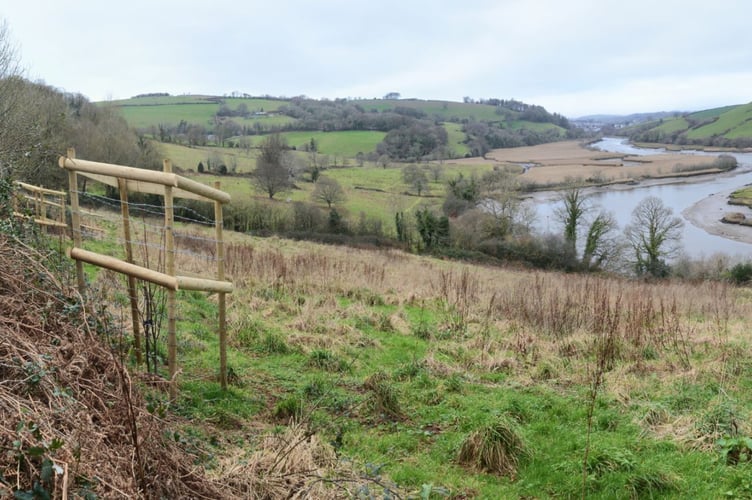
ORGANIC status has been awarded to the Sharpham Estate, as nature returns to farmland in the midst of its rewilding project.
In 2020, the estate received a £177,400 Lotto grant towards returning 50 acres of Home Farm back to nature over a three year period.
The Sharpham Trust has achieved the second part of the project’s aim – an official organic certification for the farmland.
And in the second year of its rewilding project, the number of wild birds and animals, and the estate’s biodiversity is on the rise after pesticide and fertiliser use was banned on the rewilding fields.
Trust director Julian Carnell said: “We’ve seen huge gains in terms of wildlife and biodiversity already. Our hopes are that this will continue and that we’ll be able to roll this out across the wider estate.”
During the second year of the estate’s rewilding project it has seen more small mammals on the site including shrews and voles; more birds of prey hunting over the land such as kestrels and barn owls; and more dung beetles which provide a food source for the lesser horseshoe and rarer greater horseshoe bats.
A record number of species was found in Sharpham’s most recent 24 hour bioblitz event whre participants used nets, bat listening devices, moth traps and their eyes and ears to record more than 400 different species of birds, mammals, plants and insects including sallow kitten and grey pug moths; plants such as the common mouse ear, pignut and fat hen; the siskin bird; goat willow tree and soprano pipistrelle bat.
Grazing animals have also been brought onto the land, including woolly mangalitsa pigs and belted galloway cows; new trees have been planted; and a conservation ranger has been employed to work on the land and coordinate rewilding volunteers.
The trust is working with nature conservation training organisation and Sharpham Estate tenant Ambios, which teaches camera-trap skills to nature conservation trainees and wildlife photography fans.
Ambios director Jake Skuse said: “We are delighted with how the project is going.
“Alongside the wildlife returns we have been engaging loads of different people with nature at Sharpham.
“The public have joined us on walks and tours of the rewilding; schoolkids have learnt about insects, plants and how they can rewild their school grounds; trainees have been studying and surveying the land; volunteers are helping to protect trees by erecting tree guards, fixing fences and moving pigs; and adults with learning difficulties check the welfare of the animals daily and even set up camera traps to see what wildlife passes through the site.”
Comments
This article has no comments yet. Be the first to leave a comment.