
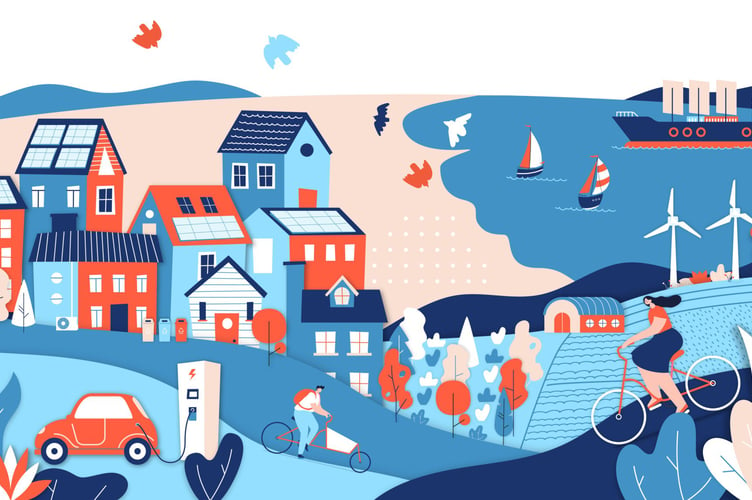
THE DEVON Carbon Plan – the county’s roadmap to becoming net-zero by 2050 – has been published this week.
Supported by the latest scientific evidence, the plan spells out what needs to be done to create a resilient, sustainable county where people and nature can thrive, by becoming net-zero by 2050 at the latest.
Through choosing what we buy, how we travel, and how we live the plan highlights long-term changes all residents can make to help reduce our impact on the planet.
Meg Booth, chair of the Devon Climate Emergency Response Group, said: “This is a plan that speaks to us all. It is the responsibility of all of us to adopt what each of us can individually from this plan.

.jpeg?width=209&height=140&crop=209:145,smart&quality=75)

“There are things that we each must do to adapt our behaviour, to reduce our individual carbon footprint. There are also things that councils, businesses, and other organisations can do to help people reduce our county’s carbon footprint. And there are things that need to be done nationally, to reduce the country’s carbon output.
“In Devon, the decarbonisation of transport, improving the energy efficiency of our buildings and the transition towards renewable energy are essential if this county is going to reach the 2050 target.
“However, it is also critical the transition to a low-carbon economy is fair, and that no area of society is unfairly disadvantaged.
“To ensure that we achieve our goals and can track our progress and resolve any issues, a series of oversight boards, made up of community representatives, including young people and specialists, will be created.
“This is the best, perhaps only, opportunity for Devon to become net-zero by 2050.
“I have no doubt that we will make the transition to a low-carbon economy, an economy which is just, fair and right for our county.”
The task force of experts who drafted the plan was led by Professor Patrick Devine Wright of the University of Exeter, who said: “We must change if we truly want to make a difference, and truly want to stop this planet from becoming inhospitable to biodiversity and humankind.
“Change can be hard, but it’s achievable. This plan sets out some very simple things that we can all do that will make a difference in reducing our carbon.
“I want us to focus on what each of us can do now; and what we can strive to do and commit to it. I don’t want us to look back and say why did we leave it too late.
“Making homes more efficient, transport cleaner and moving away from fossil fuels, can help address the cost-of-living crisis and concerns about energy supply. These changes bring with them a raft of opportunities for Devon, including new, skilled jobs.”
The plan sets out a range of detailed, evidence-based solutions and strategic objectives for national and local policy makers in areas such as energy production, transport, and the buildings we live and work in.
It has been delivered by Devon Climate Emergency, a partnership of 29 businesses, public bodies, and voluntary groups, including Devon’s 11 principal councils.
Between now and the New Year each one of those organisations will be called on to endorse and demonstrate how they will use their responsibilities and influence to enact the plan.
Most emissions (68 per cent) in Devon come from buildings - our homes and workplaces - and on-road transport. Sliced another way, 74 per cent of all emissions relate to the energy we use, from the oil and gas that power our economy, fuels our cars, and heats our homes.
The carbon plan sets out in stark terms that to achieve net-zero we must increase the amount of renewable energy we produce and use.
Currently just seven per cent of Devon’s energy comes from sustainable sources – it needs to be almost 100 per cent by 2050.
All organisations are encouraged to sign the Devon Climate Declaration through the Devon Climate Emergency website at www.devonclimateemergency.org.uk/view-devon-carbon-plan/to show the growing support for taking action.
Comments
This article has no comments yet. Be the first to leave a comment.