
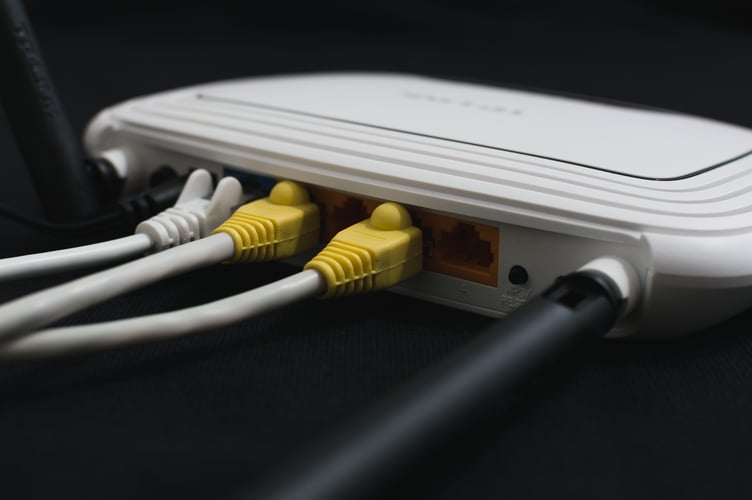
Moves are being made to try to ensure that no Devon residents are “left behind” if the government decides to switch off terrestrial television.
While many now opt for streaming and catch-up services instead of live television, some either don’t want to sign up for apps or simply don’t have broadband fast enough to support them.
A motion has now been passed by East Devon District Council to lobby Westminster to ensure no terrestrial switch off will happen until reliable broadband is available for its residents and that funding and support are available to help those make the digital transition.
Councillor Stuart Hughes (Conservative, Sidmouth Sidford), who is a local radio DJ in his spare time, brought the motion to East Devon’s full council meeting and secured widespread support for its aims.



While digital terrestrial television, which is received via an aerial and is now usually known as Freeview, may not be switched off until the 2030s, an increasingly loud campaign is urging the government to push that out to at least the mid-2040s.
One national petition has garnered more than 145,000 signatures online, with campaign groups Silver Voices and the Digital Poverty Alliance behind it.
The call is becoming more urgent as the government is set to make its decision on the matter this year.
A government report on the future of TV distribution, co-authored by the University of Exeter, showed that 17 per cent of homes still relied on digital terrestrial television – which some might term ‘normal, scheduled television’.
The report projected that by 2040, 95 per cent of households would have the capability to watch TV over the internet, with 71 per cent of those relying on it exclusively for their TV needs.
“However, without intervention, by 2040, 5 per cent of homes (1.5 million nationally) will still rely on digital terrestrial television,” the report said.
Sophie Littlewood, chief executive at Age UK Devon, said the potential switch off of traditional TV and radio through an aerial was, for many older people, “a worrying prospect”.
“We regularly hear from people who rely on their television not just for entertainment, but for company, routine, and staying connected to the world around them,” she said.
“Not everyone feels confident using the internet, and some simply don’t have access to broadband – or can’t afford the rising costs and multiple subscriptions that often come with it.
Ms Littlewood added: “In rural areas, connections can also be unreliable.”
Interestingly, Dean Stewart, chief executive of Citizens Advice East Devon, said concerns about the terrestrial switch-off hadn’t “come up on my radar, but I’m sure there are people out there who may be concerned”.
“Normally, our advisers highlight trends – but this hasn’t been a big thing for us yet,” he said.
Caroline Voaden, the Liberal Democrat MP for South Devon, and Councillor Cheryl Cottle-Hunkin (Liberal Democrat, Torrington Rural) co-wrote a letter to the government urging it to ensure it has a national strategy for rural broadband.
Without one, the pair fear, there could be tens of thousands of homes in Devon with poor broadband speeds.
If that hurdle isn’t overcome, then the prospect of having to rely on an internet connection to watch TV could become far more ominous for a not insignificant minority of Devon residents.
Comments
We've recently changed our login process. If you have an account for commenting, you will need to re-register on the login window.
This article has no comments yet. Be the first to leave a comment.